
FOR IMMEDIATE RELEASE
Conquering the Tyranny of Distance: Aerostar and Icarus combine for unmatched stratospheric surveillance solution
Sioux Falls, S.D. — July 2026 — Current global crises have delivered a warning that is impossible to ignore: modern battlefields are being reshaped by unmanned systems that can appear, adapt, and strike faster than traditional forces can respond. These capabilities are proving decisive at both the tactical and theater levels, shifting advantage to those able to project dynamic UAS operations far beyond the horizon at great standoff distances. Success in any theater now demands innovative deep-sensing platforms that can deploy rapidly, operate across immense distances, and create entirely new layers of battlefield awareness.
Aerostar, global leader in high-altitude balloon design and manufacturing with more than 70 years of stratospheric engineering expertise, and Icarus, developer of the Apollo high altitude unmanned aircraft system (UAS) to re-establish and maintain dominance in the stratosphere, have expanded their strategic partnership to deliver a tactically deployable, unmanned stratospheric platform capability designed to meet urgent needs across the vast distances Indo-Pacific and other contested theaters.
The collaboration integrates Aerostar’s micro high-altitude balloon (mHAB) platform—including the Lightning tactical mHAB capability—with Icarus’s Apollo UAS for stratospheric flight and payload effects, to provide a combined solution capable of deep sensing ISR, secure communications relay, and data backhaul from stratospheric altitudes at very long distances. These three lines of effort reflect direct feedback from military users and address critical mission gaps highlighted across current global conflicts.
"This partnership brings together two complementary capabilities that the defense community has been asking for," said Russ Van Der Werff, Aerostar Vice President of Stratospheric Solutions. "Our balloon platforms and flight management systems give Icarus a reliable, operationally proven launch architecture for their UAS, and together we can deliver a persistent, high-altitude solution that meets the evolving needs of the warfighter."
"Icarus’s Apollo was built to dominate the stratosphere, and Aerostar's launch architecture is a way to put that capability where the warfighter needs it, when they need it," said Cameron Hargis, Head of Business and Founding Member at Icarus. "Together we're delivering something neither company can currently offer alone—a proven, rapidly deployable system that turns the tyranny of distance into an advantage."
A Combined Capability Designed for the Tyranny of Distance
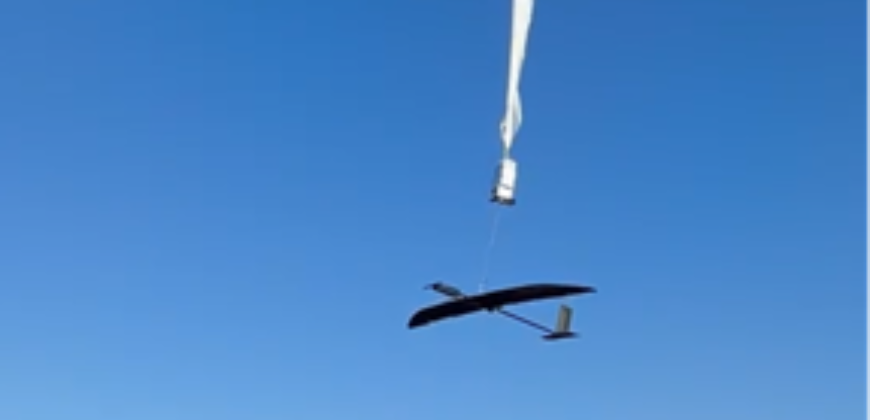
During recent joint campaigns, the two companies demonstrated successful balloon launched deployments of Apollo utilizing Aerostar high-altitude balloon platforms in a variety of austere environments, validating a reliable stratospheric launch architecture.
This integrated capability is built for theaters where the tyranny of distance makes persistent sensing extremely challenging—particularly across the island chains of the Indo‑Pacific. The partnership’s concept of operations enables U.S. forces to launch from U.S. territory such as Guam or US forward bases in partner nations, float two to three days using Aerostar’s high-altitude balloon systems, and deploy Apollo to continue precise and persistent overhead coverage of critical strategic locations with modular payloads tailored towards operational needs.
Proven Performance and High Technical Readiness
Icarus’s Apollo ability to navigate and persist in the stratosphere differentiates the system from typical air-launched effects (ALE) and demonstrates readiness for near term operational deployment. Jointly, Aerostar and Icarus have demonstrated the potential of this capability projection at several locations including the Hawaiian Islands, high-desert mountains, coastal forests, and maritime vessels underway. These demonstrations have garnered interest from many DOW groups including the US Army, Navy, and Special Operations Forces (SOF).
These milestones are central to communicating why the Aerostar‑Icarus solution is ready now to rapidly transition innovative capabilities to scale.
Alignment with PACOM and Other Combatant Command Needs
Aerostar and Icarus have demonstrated how balloon launched UAS capabilities can address real-world gaps in recent conflicts. While the primary focus remains the Pacific, the companies are also involved in operational planning in European theaters—supporting distributed operations on the eastern flank and enabling unmanned, persistent sensing systems in environments where legacy approaches fall short.
Organizational Strengths: Innovation + Scaled Manufacturing
The partnership uniquely combines Icarus’s reputation for rapid innovation with Aerostar’s seven decades of scaled manufacturing, stratospheric engineering, and proven flight operations infrastructure. This balance aligns with modern warfare requirements and reinforces the team’s ability to accelerate delivery of advanced effects to the warfighter.
Continued Customer Demand and Public Contract Momentum
Both organizations have seen sustained interest from the Army’s Multi-Domain Task Forces (MDTFs) and other DOW stakeholders through ongoing test campaigns and contract engagements. Even where details cannot be publicly disclosed, available public contract listings demonstrate momentum and underscore the growing demand to scale balloon launched unmanned systems.
About Aerostar Aerostar designs, manufactures, and operates stratospheric balloon systems and mission platforms for defense, scientific, and commercial customers worldwide. Products include Thunderhead HAB systems, Thunderstorm flight management software, and Lightning ALE platforms. Aerostar is headquartered in Sioux Falls, SD, with major flight operations at the Tillamook UAS Test Range in Oregon.
About Icarus Icarus develops high‑altitude unmanned aircraft systems engineered for stratospheric operations. The Apollo platform enables long‑endurance missions carrying modular payloads for ISR, communications, and other mission effects.
Media Contact Aerostar:
Anastasia Quanbeck
Director, Culture and Communications
Aerostar
info@aerostar.com
Media Contact Icarus:
Cameron Hargis
Head of Business
Icarus