
FOR IMMEDIATE RELEASE
High Altitude Balloons: A New Frontier in Hurricane Hunting
Sioux Falls, S.D., -- September 2026 -- Long before a hurricane reaches the evening news, it begins as a question mark over the vast stretches of the Atlantic: Where will it go, how strong will it become, and who is in its path? High Altitude Balloons (HABs) offer a new way to answer those questions earlier, closer to the storm, and farther from shore than many traditional systems can reach.
Hurricane forecasting already relies on a powerful mix of satellites, ocean buoys, aircraft, coastal radar, and numerical weather models. Each plays a critical role. But across the thousands of miles of the Atlantic Ocean between the west coast of Africa, the Caribbean, and the United States, developing storms can still move through areas where the data picture is intermittent, incomplete, or difficult to control. Satellites provide essential coverage, but they often observe storms from above rather than from within. Radar is highly effective closer to land but fades over open ocean. Hurricane hunter aircraft collect invaluable in-situ data, but they can only cover part of a storm for part of a day, and they require crews to fly directly into dangerous conditions.
"Stratospheric observations near tropical cyclones are typically sparse and have the potential to improve hurricane forecasts." - Ghassan Alaka, PhD, Hurricane Research Director NOAA/OAR/AOML/Hurricane Research Division
High Altitude Balloons do not replace these systems. They add a new critical layer to them.
A New Layer, A New Advantage
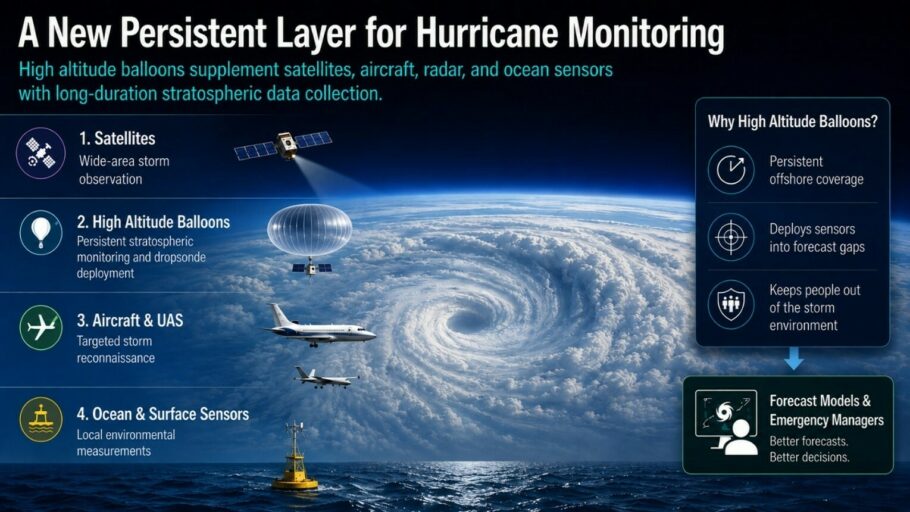
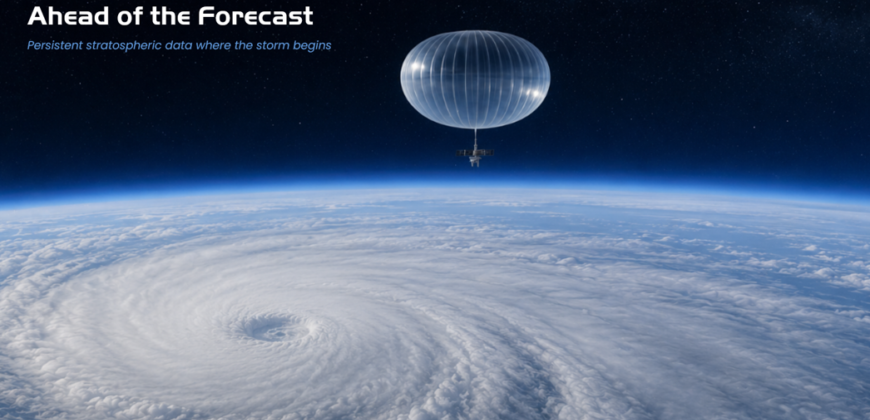
Operating in the stratosphere, above commercial air traffic and most weather systems, maneuverable HABs can persist over remote ocean areas, reposition as storms develop, and carry advanced sensor payloads directly to the places where better data can improve forecast confidence. Instead of waiting for a storm to approach land, HABs can help observe it while it is still forming, strengthening, and moving across the Atlantic.
“High altitude balloons bring persistence, reach, and maneuverability to places traditional systems struggle to access” said Russ Van Der Werff, Aerostar Vice President of Stratospheric Solutions. “By combining Aerostar’s stratospheric flight experience with advanced weather modeling, sensing, imaging, and deployable atmospheric sensors from innovative partners, we can create a new layer of hurricane intelligence that improves forecasting, supports better decisions, and ultimately help protect lives and communities.”
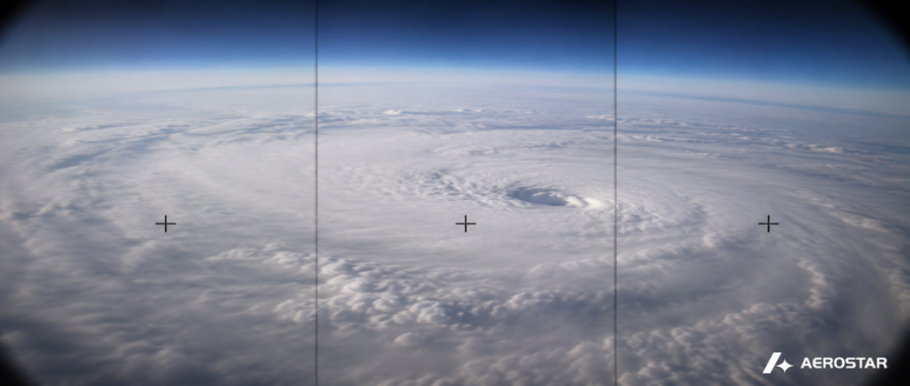
Aerostar has spent more than a decade advancing this operating model through its Thunderhead Balloon System. With more than 25,000 flight hours over the Atlantic, the Thunderhead has demonstrated the ability to operate ultra-long-duration stratospheric missions for greater than 300 days in support of weather monitoring, natural disaster response, defense, and telecommunications. During Hurricane Melissa, Aerostar piloted a Thunderhead HAB over the storm to capture imagery, observe storm behavior, monitor stratospheric effects, and feed collected information into live weather modeling efforts.
The opportunity now is to turn that persistence into a more complete hurricane-monitoring architecture.
Innovation Rising Through Collaboration
Aerostar is partnering with severe-weather technology innovators, including Aeolus Labs and Voltitude, to expand the kinds of weather data Thunderhead can collect and deliver. Aeolus brings advanced sensing instruments, frontier weather modeling, and atmospheric analysis capabilities that can help Thunderhead seek out, remain near, and collect data from the areas where severe weather is developing. Integrated payloads such as radar, optical cameras, and meteorological instruments can give forecasters new views into fast-changing atmospheric conditions.
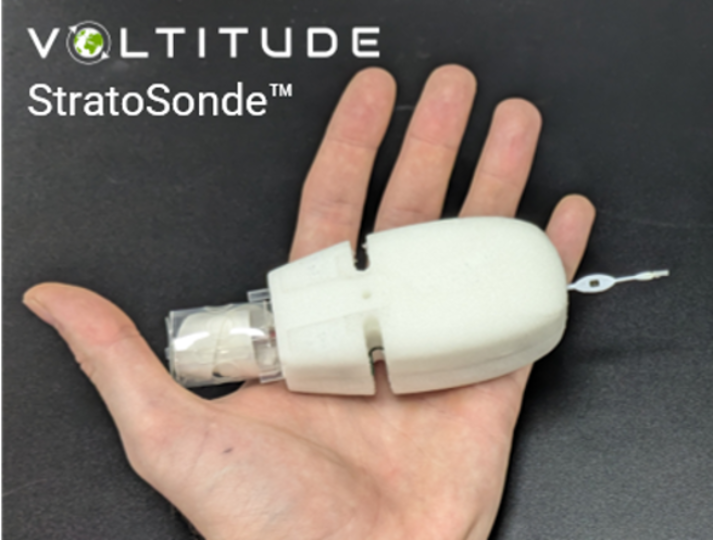
Voltitude’s StratoSonde™ dropsonde system adds another critical capability: the ability to deploy lightweight weather sensors directly into the atmosphere below. Each StratoSonde™ weighs less than 20 grams and descends from the stratosphere toward sea level, transmitting near-real-time measurements of temperature, pressure, humidity, wind speed, and wind direction through the balloon as a communication relay. Released from a Thunderhead HAB, these sensors can profile parts of the atmosphere that are rarely observed today, including remote marine boundary layers and tropical regions where hurricanes form and intensify.
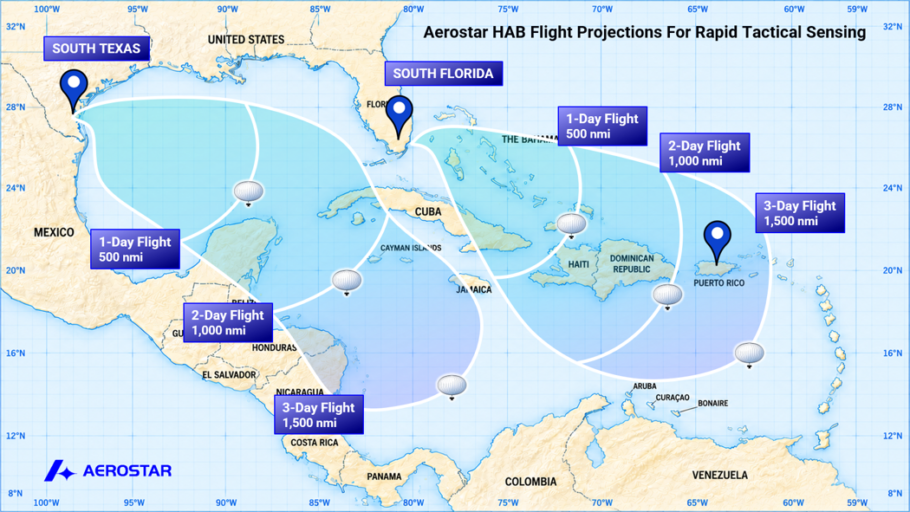
This is where HABs become especially disruptive. A Thunderhead balloon equipped with a dispensing system could carry large numbers of micro-dropsondes hundreds or thousands of miles offshore, hold them dormant for extended periods, and deploy them on command into areas of greatest forecast uncertainty. That means weather nodes can be delivered directly into forming storms, mature hurricanes, and the surrounding environment without putting pilots or aircraft crews at risk.
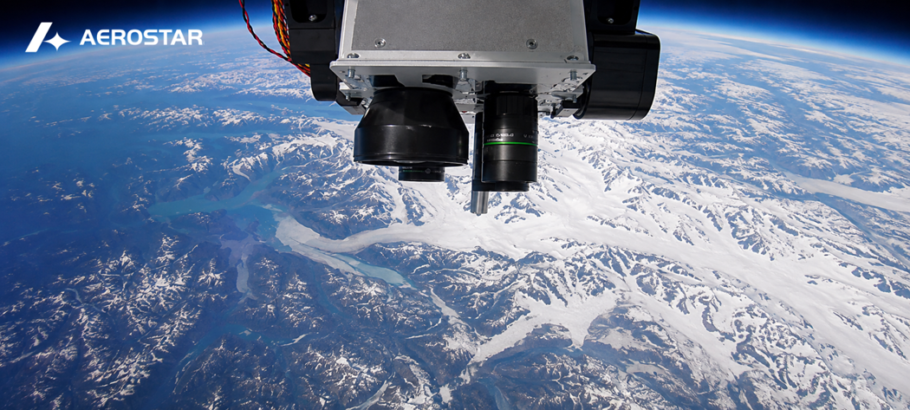
Thunderhead can also support dynamic imaging systems such as Aerostar’s StratoCam, a gimballed multi-spectral optical package capable of collecting visible, infrared, and hyperspectral imagery from the stratosphere. By capturing and stitching storm imagery quickly, these systems can provide additional real-time insight into storm formation, structure, and intensity.
In addition to fixed sensors and deployable sondes, Aerostar’s Thunderhead HABs and tactical Lightning mHAB systems can also serve as airborne launch platforms for small unmanned aircraft carrying specialized weather and sensing payloads. This creates another way to place instruments directly into the areas where storms are forming, intensifying, or approaching land.
Thunderhead HABs can carry multiple Class 1 and Class 2 UAS, as well as an emerging category of stratospheric UAS designed for glide or powered flight from high altitude. Acting as a persistent mothership, a Thunderhead HAB can transport these systems far offshore, position them near priority storm environments, and release them when and where additional data is needed most. This approach extends the reach of existing sensor technologies, allows multiple observations to be made from a single stratospheric platform, and further expands the role of HABs as a flexible, long-duration layer in hurricane monitoring.
The broader value is not a single sensor or a single flight. It is persistence at scale with multiple cooperative sensors.
Thriving Where the Storm is Hardest to Reach
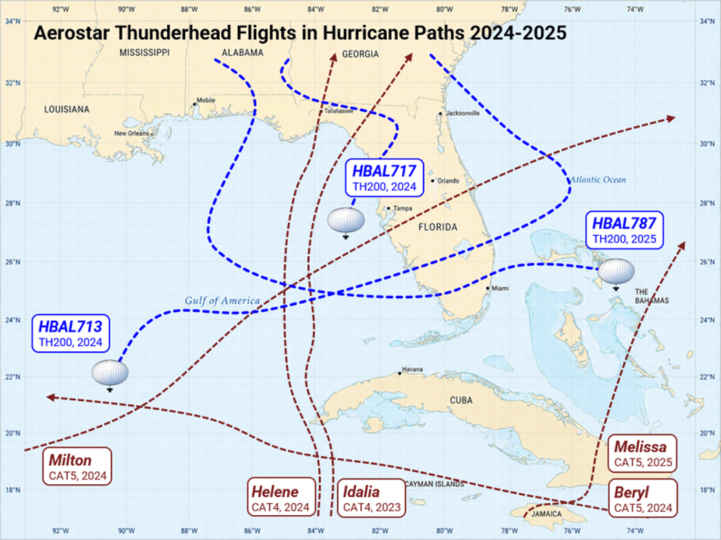
“In cooperation with Aeolus, Voltitude, and other partners, we are building toward a near future where HABs can remain active across the Atlantic during the height of hurricane season” says Kyle Doverspike, Aerostar Senior Product Manager for Stratospheric Solutions. “These technologies will provide a data pipeline to the places hardest to reach.” Aerostar is already operating Thunderhead HABs in these critical areas, poised to respond to emergencies as they emerge, repositioning as forecast priorities change, and delivering recurring observations throughout a storm’s lifecycle. Unlike aircraft, these platforms do not need to return to base after each sortie. Unlike satellites, they can be steered toward specific areas of interest and paired with deployable in-situ sensors. Unlike fixed infrastructure, they can move with the problem.
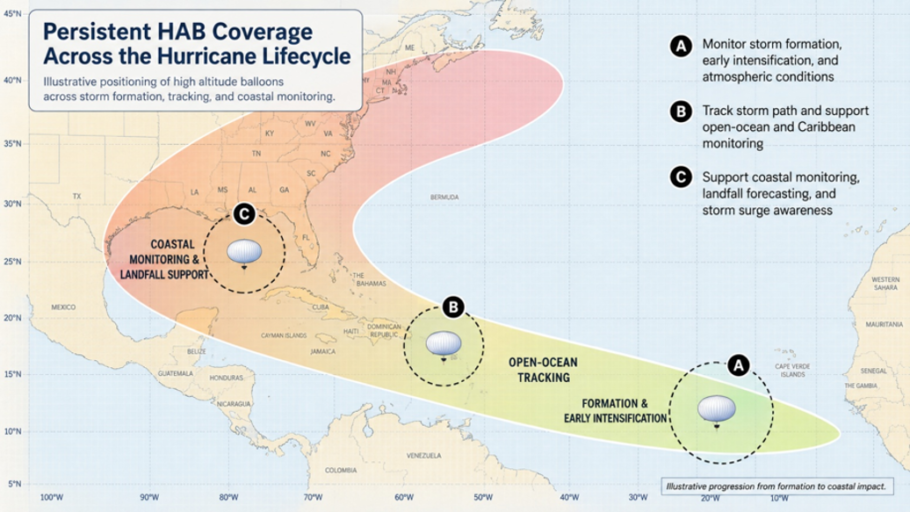
As hurricanes pose growing risks to coastal communities, better data is essential for better decisions. High Altitude Balloons represent a new layer in hurricane monitoring: persistent, maneuverable, responsive, and able to collect data where it matters most. By supplementing today’s satellites, aircraft, radar, and forecasting systems, HABs can help improve warning times, strengthen predictions, and give emergency managers a clearer picture of storms before they reach shore.
About Aerostar
With over 70 years of lighter-than-air innovation and expertise and two million flight hours in the stratosphere, Aerostar designs, manufactures, and operates stratospheric balloon systems and mission platforms for defense, scientific, and commercial customers worldwide. Headquartered in Sioux Falls, South Dakota, Aerostar provides world-leading solutions in the aerospace and defense market, focused on stratospheric balloon systems and radar solutions. Aerostar is part of the TCOM portfolio of aerospace and defense companies. Learn more at www.aerostar.com
Media Contact Aerostar:
Anastasia Quanbeck
About Voltitude Ltd
Voltitude Ltd is a UK-based aerospace company developing high-altitude platform systems (HAPS), including fixed-wing solar powered UAS and balloon deployed advanced atmospheric sensing solutions. Based in Farnborough UK, the company designs, manufactures, and operates innovative stratospheric platforms that enable persistent communications, environmental monitoring, scientific research, and defence applications. Voltitude is the developer of the patented StratoSonde™ dropsonde delivery system and the StratoSat™ family of high-altitude platforms, with a growing portfolio of proprietary technologies supporting the future of stratospheric operations. For more information, visit www.voltitude.co.uk
Media Contact Voltitude:
Paul Stevens
paul.stevens@voltitude.co.uk